The Fundamentals of PRP
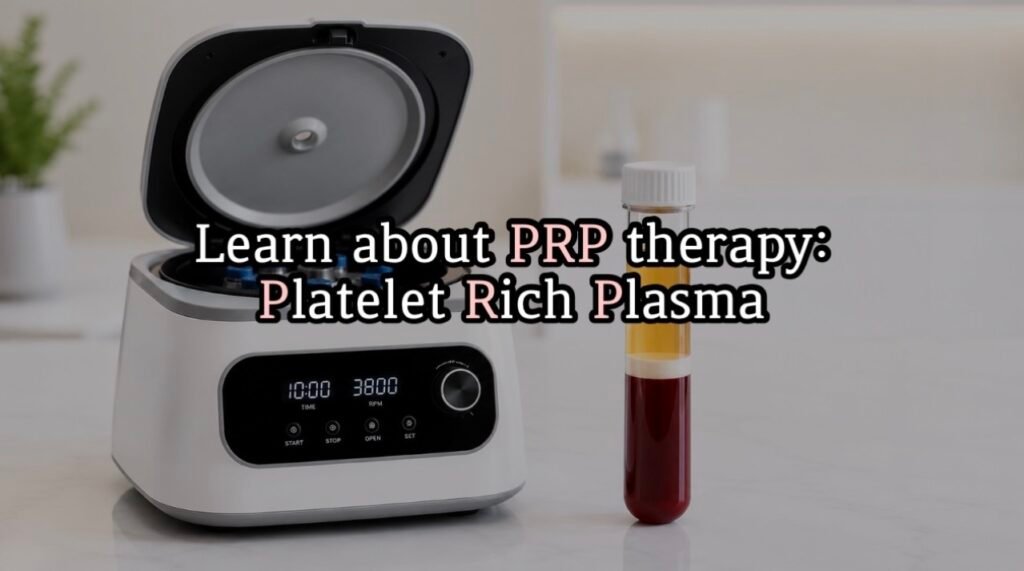
Platelet-Rich Plasma (PRP) is an autologous treatment, meaning it is made from the patient’s own blood.
A blood sample is collected and processed to concentrate platelets above baseline levels. Because PRP comes from the individual being treated, it is widely used as a biologic option in regenerative and aesthetic medicine.
Platelets are best known for clotting, but they also contain alpha-granules that store growth factors and signaling proteins involved in tissue repair.
Biological Mechanism
After PRP is prepared and injected, platelets release growth factors that help coordinate healing:
- VEGF (Vascular Endothelial Growth Factor):
- Supports angiogenesis, or the formation of new blood vessels, which improves oxygen and nutrient delivery to tissue.
- PDGF (Platelet-Derived Growth Factor):
- Helps recruit reparative cells and supports cell proliferation and collagen-related repair activity.
- TGF-β (Transforming Growth Factor-Beta):
- Contributes to tissue remodeling and helps regulate how repair progresses over time.
The Importance of the Dose
PRP quality is not defined by the label alone. Dose matters. Scientific literature increasingly supports a therapeutic concentration of at least 1,000,000 platelets per microliter (µL) as a meaningful benchmark for clinical effect.
In facial aesthetics and scalp treatments, concentration and overall platelet yield both influence how much biologic signaling is delivered to the target tissue. In practical terms, a higher-quality PRP preparation should aim not only for adequate platelet concentration, but also for a sufficient total number of platelets in the final injectate.
Common Clinical Applications
- Facial Rejuvenation:
- Used to support collagen stimulation, skin texture, tone, and overall skin quality.
- Under-Eye and Delicate Skin Areas:
- Sometimes used to improve skin quality in thinner, more fragile areas where careful technique matters.
- Hair Restoration:
- Used in patients with hair thinning to support follicular activity, improve hair density, and encourage a healthier scalp environment.
Preparation Protocol
Preparation affects PRP quality and patient experience.
- Hydration:
- Good hydration supports an easier blood draw and helps optimize plasma yield.
- Avoid NSAIDs:
- Nonsteroidal anti-inflammatory drugs such as ibuprofen and aspirin may interfere with platelet function and are commonly avoided before treatment based on clinical protocol.
- Single-Spin vs. Double-Spin Centrifugation:
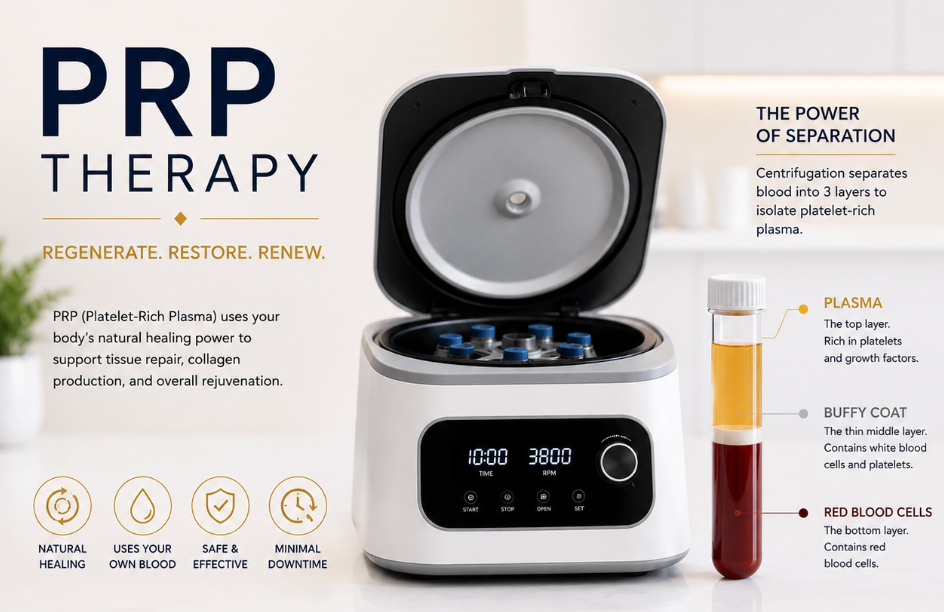
- Single-spin preparation is simpler and may be used in some applications, but it can produce lower platelet concentration.
- Double-spin preparation uses two centrifugation steps and is often more reliable when higher platelet concentration is the goal.
Timeline & Safety
PRP is made from the patient’s own blood, which is a major reason it is generally considered a safe treatment option when prepared and performed appropriately. Because it is autologous, the risks of allergic reaction and immune rejection are very low.
Results are not immediate. PRP works by supporting a biologic repair process, and visible or symptomatic improvement typically appears over 3 to 6 months depending on the treatment area and baseline condition.
References
Growth Factor Mechanics: Passaretti, F., et al. “The role of VEGF, PDGF, and TGF-β in tissue regeneration.” Studioti Research Archives.
Concentration Thresholds: Clinical Study on PRP Stratification (2024). Findings on the 1.2M/µL threshold for clinical success. PubMed Central PMC12027823.Hair Restoration Efficacy: Ghanem, M., et al. (2023). “Comparison of single-spin to double-spin plasma in Androgenetic Alopecia.” Journal of Clinical and Aesthetic Dermatology (JCAD).