
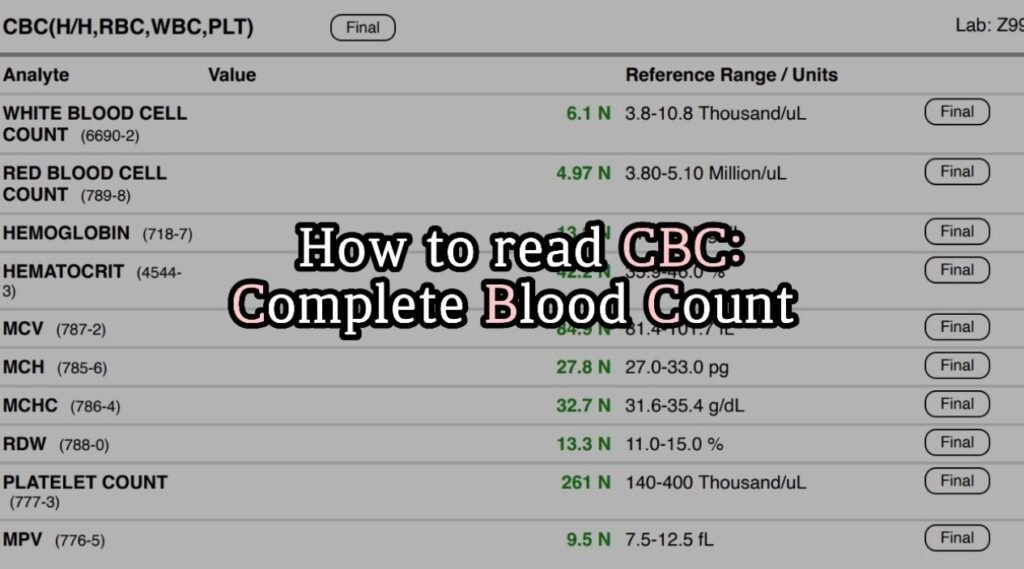
If you’ve ever had blood work done during a routine check-up or while looking into symptoms like fatigue, a CBC was likely one of the first tests ordered.
CBC stands for Complete Blood Count.
It is one of the most common and useful blood tests in medicine because it gives a clear overview of the cells circulating in your blood.
At my practice, I use this test as an important starting point.
A CBC can help identify patterns that may point to anemia, infection, inflammation, bleeding issues, or other underlying concerns.
In this article, I’d like to explain what a CBC is, why it is tested, what the main markers mean, and how to read the results in a simple, straightforward way.
What Exactly is a CBC?
In simple terms, a CBC is a blood test that measures the number and characteristics of the main cells in your blood.
When a lab performs a CBC, it looks at:
- Red Blood Cells (RBCs): These carry oxygen through the body.
- White Blood Cells (WBCs): These help your body fight infection and respond to inflammation.
- Platelets: These help your blood clot and stop bleeding.
A CBC gives helpful information about oxygen delivery, immune activity, clotting, hydration status, and sometimes bone marrow function. It is often used as a first step in understanding how the body is functioning overall.
Why Do We Test For It?
A CBC is ordered for several common reasons. It is useful both for routine screening and for evaluating symptoms.
1. Routine Health Screening
A CBC is often included in annual or preventive blood work. It helps establish a baseline and can detect changes before symptoms become obvious.
2. Evaluating Fatigue or Weakness
One of the most common reasons to order a CBC is to look for anemia or other issues that may affect oxygen delivery throughout the body.
3. Checking for Infection or Inflammation
Changes in the white blood cell count can suggest that the body is responding to an infection, inflammation, or another immune-related issue.
4. Assessing Bleeding or Bruising Concerns
Platelet levels can help explain symptoms such as easy bruising, prolonged bleeding, or clotting concerns.
5. Supporting a Bigger Clinical Picture
A CBC does not give every answer on its own, but it often provides important clues that help guide the next step in evaluation.
The Big Players: What to Look At
When you review a CBC, five markers are especially important to understand.
1. Red Blood Cells (RBC)
Red blood cells carry oxygen from the lungs to the rest of the body.
If the RBC count is too low, it may suggest anemia or blood loss.
If it is too high, it may be related to dehydration, low oxygen states, or other medical conditions.
2. White Blood Cells (WBC)
White blood cells are part of the immune system.
They help the body fight infections and respond to inflammation.
A high WBC count may suggest infection, inflammation, stress, or another immune response.
A low WBC count may mean the immune system is suppressed or not producing enough cells.
3. Platelets
Platelets help the blood clot.
If platelet levels are too low, bruising or bleeding may happen more easily.
If platelet levels are too high, it can sometimes be linked to inflammation, iron deficiency, or other underlying issues.
4. Hemoglobin (Hgb)
Hemoglobin is the protein inside red blood cells that carries oxygen.
This is one of the most important markers for identifying anemia.
Low hemoglobin can be associated with fatigue, weakness, shortness of breath, or feeling cold.
5. Hematocrit (Hct)
Hematocrit shows the percentage of your blood made up of red blood cells.
It is often interpreted together with RBC and hemoglobin.
Low hematocrit may support a diagnosis of anemia, while high hematocrit may be seen with dehydration or certain oxygen-related conditions.
How to Interpret the Results (The Simple Version)
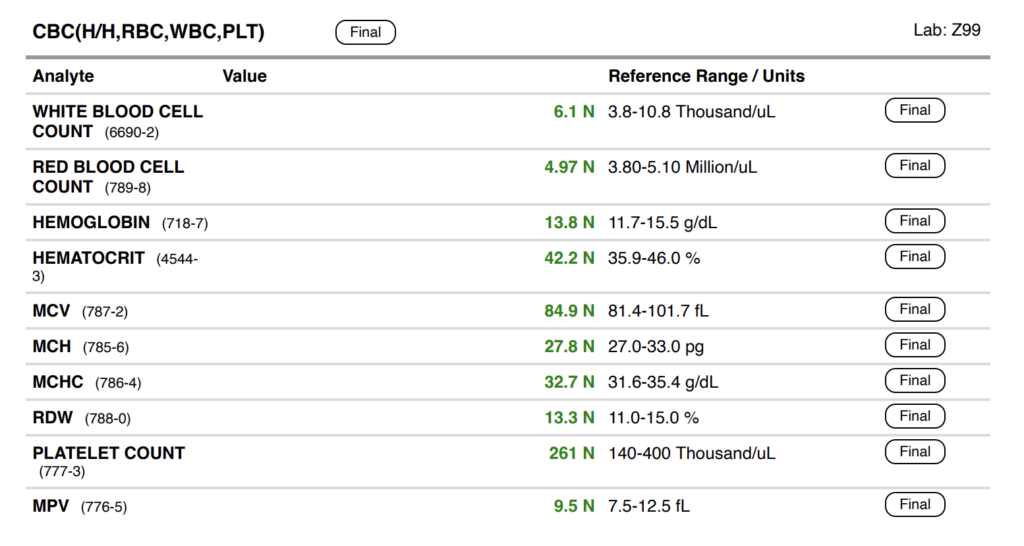
When you look at your lab report, you will see a reference range next to each value. This range shows what the lab considers typical for most healthy people.
Results slightly outside the range do not always mean something serious, but they do deserve the right clinical context.
If a result is high
A high value can mean the body is responding to something or compensating for something.
- High RBC / Hemoglobin / Hematocrit:
- May be seen with dehydration, smoking, sleep apnea, or other conditions that affect oxygen levels.
- High WBC:
- May suggest infection, inflammation, physical stress, or medication effects.
- High Platelets:
- May occur with inflammation, iron deficiency, or sometimes after illness.
If a result is low
A low value may suggest that the body is lacking what it needs or not producing enough cells.
- Low RBC / Hemoglobin / Hematocrit:
- Often raises concern for anemia, which can reduce oxygen delivery to tissues.
- Low WBC:
- May increase the risk of infection and can be related to viral illness, medications, or bone marrow suppression.
- Low Platelets:
- May increase the risk of easy bruising or bleeding.
The Most Important Point
A CBC should not be interpreted by looking at one number alone.
The pattern matters. RBC, hemoglobin, and hematocrit are often reviewed together.
WBC and platelets are also interpreted alongside symptoms, medical history, and sometimes additional testing.
What Should You Do Next?
If you have a copy of your recent blood work, it can be helpful to review the main CBC markers and note whether anything falls outside the reference range.
A few practical tips:
- Stay hydrated:
- Dehydration can affect some CBC values.
- Track trends over time:
- Comparing current results with past results is often more useful than looking at one test alone.
- Discuss results with your clinician:
- Interpretation depends on your symptoms, medical history, medications, and other lab findings.
A CBC is a valuable screening tool, but it is only one part of the bigger picture. When used correctly, it can provide clear and important information about your overall health.
Scientific References & Further Reading
- Hoffman, R., et al. (2018). Hematology: Basic Principles and Practice. This textbook remains the gold standard for understanding how cellular components interact within the human body.
- World Health Organization (WHO). (2021). Anaemia prevention, control and elimination. A comprehensive look at how CBC markers like Hemoglobin help identify global health trends.
- American Association for Clinical Chemistry (AACC). Complete Blood Count (CBC): The Test. An evidence-based guide to clinical indications and interpretation of blood counts.
- Journal of Clinical Medicine. (2020). The Role of White Blood Cell Count in Systemic Inflammation. Research exploring the link between WBC differentials and chronic inflammatory states.
Disclaimer: This blog post is for educational purposes only and does not constitute medical advice. Always consult with a qualified healthcare provider regarding your lab results and health concerns.