If you’ve been scrolling through health podcasts or biohacking forums lately, you’ve probably heard the term NAD+ thrown around more than a few times. It’s often hailed as the “fountain of youth” or the ultimate energy molecule.
But behind the marketing hype is a very real, very essential biological truth: NAD+ is the fuel that keeps your cells running. And for most busy professionals; people juggling high-stress careers, family, and the natural process of aging, this fuel tank is likely running on empty.
At my practice, I don’t believe in just “guessing” which supplements you need based on a trendy TikTok. I believe in the root-cause approach.
Today, I’d like to go over what NAD+ actually is, why it’s disappearing from your system, and why testing your levels is the only way to truly reclaim your vitality.
What Exactly is NAD+?
Think of your body as a high-performance vehicle.
You can have the best engine (your genetics) and the most expensive tires (your gym routine), but if there’s no fuel in the tank, you aren’t going anywhere.
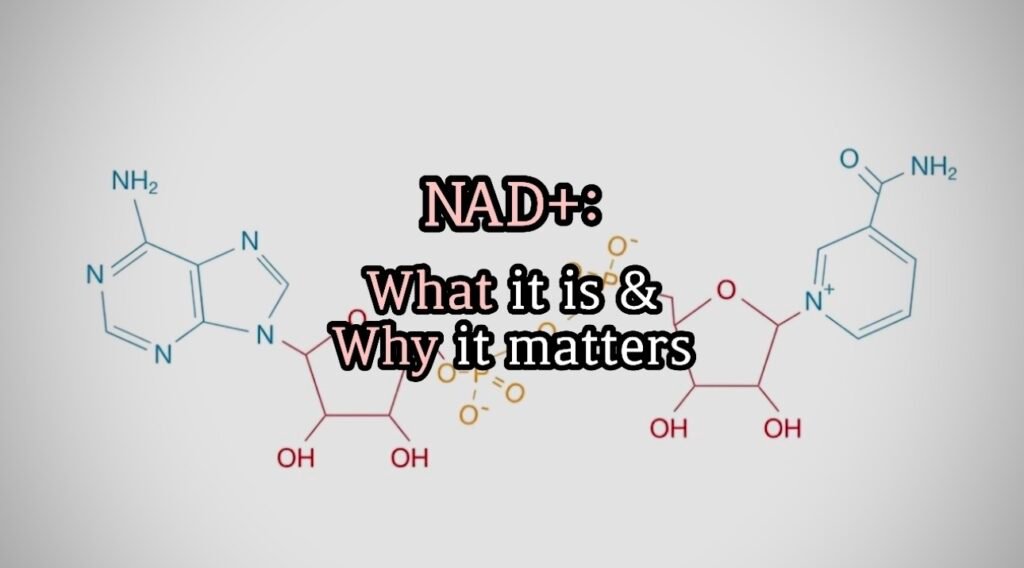
NAD+ (Nicotinamide Adenine Dinucleotide) is that fuel. It is a coenzyme found in every single cell of your body. Its primary job is to facilitate “redox reactions,” which is just a fancy scientific way of saying it helps turn the food you eat into the energy your body uses to breathe, move, and think.
Without enough NAD+, your mitochondria (the power plants of your cells) can’t produce ATP, which is the actual energy currency of life. But NAD+ isn’t just about energy. It’s also a key player in:
- DNA Repair: It activates enzymes called sirtuins and PARPs that fix damaged DNA.
- Gene Expression: It helps turn “good” genes on and “bad” genes off.
- Circadian Rhythms: It helps regulate your internal clock so you can sleep and wake up when you’re supposed to.
The Slow Leak: Why Your NAD+ Levels Decline
In a perfect world, our bodies would produce all the NAD+ we need forever. Unfortunately, biology has other plans.
Research shows that by the time we hit middle age, our NAD+ levels have often dropped by as much as 50% compared to our youth.
Why does this happen? It’s usually a combination of two things: we’re making less of it, and we’re using it up too fast.
1. The Aging Process
As we get older, an enzyme called CD38 becomes more active. CD38 is basically an “NAD+ consumer.” It gobbles up your cellular fuel, leaving less for energy and repair. This is one of the primary reasons we feel “slower” as the decades pass.
2. Chronic Stress (The Professional’s Tax)
For the busy professionals I see in my clinic, stress is the biggest NAD+ drain. High cortisol levels and the constant “fight or flight” state require massive amounts of cellular energy. Your body prioritizes survival over long-term repair, burning through its NAD+ stores just to keep you functioning under pressure.
3. Poor Diet and “Hidden” Illness
A diet high in processed sugars and inflammatory fats forces your cells to work overtime to process toxins and manage blood sugar spikes. Similarly, if you’re fighting off a low-grade chronic illness or dealing with gut inflammation, your immune system is likely “stealing” NAD+ to fuel its defense mechanisms.
Why Testing Matters (Stop Guessing, Start Measuring)
This is where the “Inner Clinic” approach differs from your local IV lounge. Most people feel tired and immediately reach for an NMN or NR supplement: the precursors to NAD+. But how do you know if you’re actually deficient? And more importantly, how do you know why you’re deficient?
If you have a hole in your gas tank, simply pouring more fuel in won’t solve the problem. You have to patch the hole.
Identifying the Root Cause
Testing for NAD+ and its related metabolites allows us to see the full picture. We aren’t just looking for a single number; we are looking for imbalances in the entire pathway.
For instance, we test for Vitamin B3 (Niacin) metabolites. Since Vitamin B3 is a foundational building block for NAD+, a deficiency here can cascade into total cellular exhaustion. If we just give you an NAD+ drip without addressing a B3 deficiency or a metabolic bottleneck, the results will be temporary at best.
Precision Dosing
Everyone’s biochemistry is different. Some people respond incredibly well to oral precursors like NMN, while others have a “bottleneck” in their enzymes that makes oral supplements useless. In those cases, IV therapy or specific lifestyle shifts are required. Testing tells us exactly which tool to use.
The “Inner Clinic” Approach to NAD+ Optimization
I’d like to look at NAD+ as one piece of a much larger puzzle.
- Comprehensive Diagnostics: Start with a blood panel that looks at NAD+ levels, B-vitamin status, and inflammatory markers.
- Environmental Review: Look at your stress levels, sleep quality, and diet. Are you “leaking” energy through poor habits?
- Bespoke Protocol: Based on your labs, we might recommend a specific combination of high-grade supplements, lifestyle shifts (like intermittent fasting or cold exposure, which naturally boost NAD+), or targeted IV treatments.
- Follow-up Testing: Science is about data. We re-test to ensure your levels are actually rising and your cellular function is improving.
How to Start Boosting Your Cellular Fuel Today
While testing is the gold standard, there are simple things you can do right now to support your NAD+ levels:
- Exercise: High-intensity interval training (HIIT) has been shown to boost the enzymes that create NAD+.
- Manage Your B3: Ensure you’re getting enough niacin-rich foods like wild-caught fish, poultry, and green vegetables.
- Prioritize Sleep: Your NAD+ levels follow your circadian rhythm. If your sleep is trashed, your cellular energy will be too.
- Time-Restricted Feeding: Giving your digestion a break allows your body to focus on cellular repair rather than just processing food.
Scientific References:
- Shade, C. (2020). The Science Behind NMN–A Stable, Reliable NAD+ Activator and Anti-Aging Molecule. Integrative Medicine: A Clinician’s Journal. https://pmc.ncbi.nlm.nih.gov/articles/PMC7238909/
- Covarrubias, A. J., Perrone, R., Grozio, A., & Verdin, E. (2021). NAD+ metabolism and its roles in cellular processes during ageing.
- Nature Reviews Molecular Cell Biology, 22(2), 119–141. https://www.nature.com/articles/s41580-020-00313-xNational Center for Biotechnology Information. (2022). Therapeutic Potential of NAD+ Augmenting Strategies. PMC. https://pmc.ncbi.nlm.nih.gov/articles/PMC9339518/
- Cleveland Clinic. (2023). NAD+ Supplements: Do They Work? https://health.clevelandclinic.org/nad-supplement